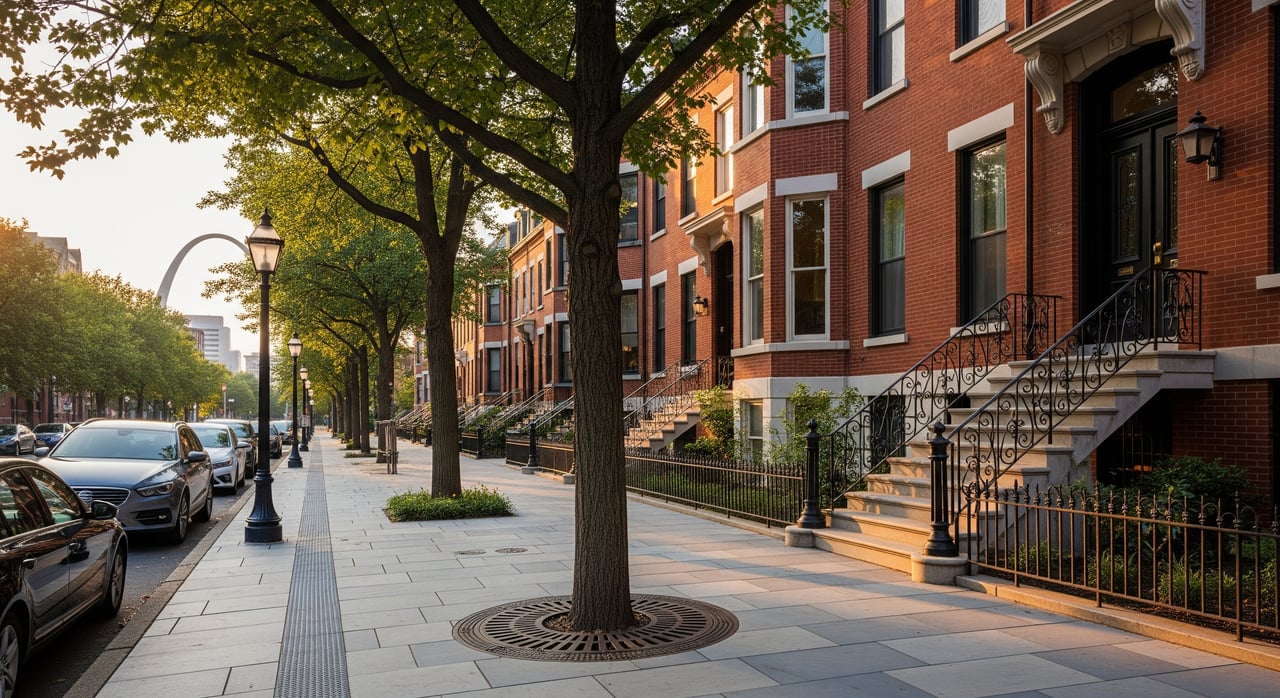
Cracked sidewalks or lifted slabs from tree roots can chip away at curb appeal and create safety issues. If you own a home in the City of St. Louis, you have options to address both without losing the tree canopy you love. In this guide, you’ll learn how the City’s 50/50 Sidewalk Repair Program works, what to do when street-tree roots are involved, which permits you will likely need, and a simple checklist to move forward with confidence. Let’s dive in.
Who maintains what in St. Louis
Sidewalks typically sit in the public right of way, but the abutting property owner is usually responsible for maintaining them to City standards. The City enforces those standards, inspects work, and can order or arrange repairs if needed. Confirm exact code language with the City of St. Louis.
Street trees located in the parkway or terrace are generally public trees managed by the City’s Forestry Division. Forestry oversees pruning, removals for hazards, and permitting related to street trees. When a sidewalk project and a street tree conflict, Streets and Forestry usually coordinate the plan.
The 50/50 Sidewalk Repair Program
The City offers a cost-share program often called the 50/50 Sidewalk Repair Program. It helps eligible owners replace or repair sidewalks to current standards while sharing costs with the City. Program details can change, so verify current rules with City staff before you start.
What to confirm before you apply
- Eligibility: which blocks or segments qualify and whether residential or commercial properties are included.
- Cost split: the typical split is 50 percent City and 50 percent owner for qualifying work. Ask about caps, fees, and any special terms.
- Scope: whether the work covers full slab replacement, spot repairs, curb tie-ins, or ADA ramps at corners.
- Contractor: whether the City manages bidding and scheduling or you must hire an approved contractor.
- Payments: when your share is due and whether assessment or installment options exist.
- Permits and inspections: which permits are required and at what stages inspections occur.
What the City typically handles
- Inspection to identify required repairs.
- Scheduling, notices, and contractor approval if City-managed.
- Paying the City’s share of eligible costs under program rules.
- Ensuring work meets construction, drainage, and ADA standards.
- Coordinating with Forestry if trees or roots are involved.
What you’re responsible for
- Applying or opting into the program and responding to notices.
- Paying your share as required by the program.
- Pulling permits if you manage your own contractor.
- Making sure private work meets City standards and passes inspection.
Trees, roots, and your sidewalk
Public street trees are overseen by the City’s Forestry Division. Private trees on your property are your responsibility. When roots disrupt a sidewalk, expect Forestry to assess the tree and recommend a solution that balances safety, accessibility, and tree health.
When roots lift a sidewalk
Cities often prioritize keeping healthy public trees. Forestry may recommend mitigation measures like selective root pruning, root barriers, or alternative sidewalk designs rather than removal. Unauthorized pruning or removal of a street tree can lead to fines and replacement requirements. Always contact Forestry first.
Root-friendly fixes to ask about
- Full-depth replacement with proper base compaction and slightly larger joints.
- Shorter concrete panels or jointed systems that flex more than large slabs.
- Reinforced subbases, root barriers, or engineered soils to direct roots downward.
- Limited root pruning only when appropriate and approved by Forestry.
- Tree relocation or replacement in rare cases when mitigation is not feasible.
Permits, ADA rules, and inspections
- Permits: Sidewalk replacement typically requires City permits or a notice to proceed. Tree pruning or removal in the public right of way usually requires a permit or City action by Forestry.
- ADA standards: Replaced sidewalks and curb ramps must meet federal and local accessibility standards. This includes slope, cross slope, and detectable warnings at curb ramps.
- Inspections and enforcement: The City inspects completed work. If work does not comply, you may be required to correct it. If an owner fails to act on an official order, the City can complete the work and recover costs, which may include an assessment or lien. Confirm the process and timelines with City staff.
Typical timelines
- Initial inspection or a notice to repair can take weeks to a few months depending on backlog.
- Program scheduling across multiple blocks can extend into the next construction season.
- Emergency hazards may be addressed quickly for public safety.
A homeowner checklist
Before you start
- Contact the City to ask if your address is eligible for the 50/50 program and request an inspection.
- Contact Forestry to report tree issues or ask about permits if roots are involved.
- Ask whether the City will manage contractor selection or if you must hire from an approved list.
- Verify required permits and whether corner ADA upgrades are included.
- Request a written estimate, payment timing, and any financing or assessment options.
When hiring or approving work
- Choose licensed, insured contractors who know City sidewalk and ADA standards.
- Require a written plan for tree protection and root treatment if needed.
- Confirm the schedule and inspection steps with the City.
After work is complete
- Get final inspection sign-off and keep documentation for your records.
- Confirm any Forestry permits for pruning or removal were issued and ask about replacement planting requirements.
Curb appeal tips that protect trees
- Preserve mature street trees when possible. They add shade and value and are popular with many neighborhoods.
- Favor designs that reduce future conflicts, like shorter panels, thoughtful jointing, and approved root barriers.
- Consider permeable pavers or flexible systems in the parkway only if allowed by the City.
- Follow Forestry-recommended species lists when replacing trees and maintain proper mulching and watering.
A note for West County homeowners
If your home is in a West County suburb such as Ladue, Clayton, Town and Country, Kirkwood, Olivette, or Creve Coeur, local rules and programs may differ. Contact your municipality for current sidewalk and street-tree policies. For City of St. Louis addresses, the guidance above applies.
Ready to plan your curb appeal?
If you are thinking about selling or you just purchased and want a safe, beautiful streetscape, you do not have to navigate this alone. I can help you line up the right steps, vendors, and timelines so your sidewalk and street trees support your home’s value and your daily life. Schedule a private consultation with Sandra Mesker to get a personalized plan.
FAQs
Who pays for sidewalk repair in the City of St. Louis?
- Under the City’s 50/50 program, eligible repairs are cost-shared between the City and the owner. If you are not eligible or receive a separate repair order, you may be fully responsible under local rules.
Can I remove a street tree that is damaging my sidewalk?
- Not without City approval. Contact Forestry for an assessment. Unauthorized removal can result in fines and a requirement to replace the tree.
How long does a City-managed sidewalk project take?
- Timing depends on inspections and scheduling. Non-emergency projects can take weeks to months, while emergency hazards are addressed more quickly.
Will my new sidewalk meet ADA standards?
- Yes for City-managed work, and privately managed work in the right of way must meet the same standards. Make sure your contractor understands ADA requirements.
Who should I contact for permits and inspections?
- Contact the City’s Sidewalk or Streets program for sidewalk permits and inspections, and the Forestry Division for street-tree concerns, pruning, or removal permits. Verify current processes on the City’s official website.